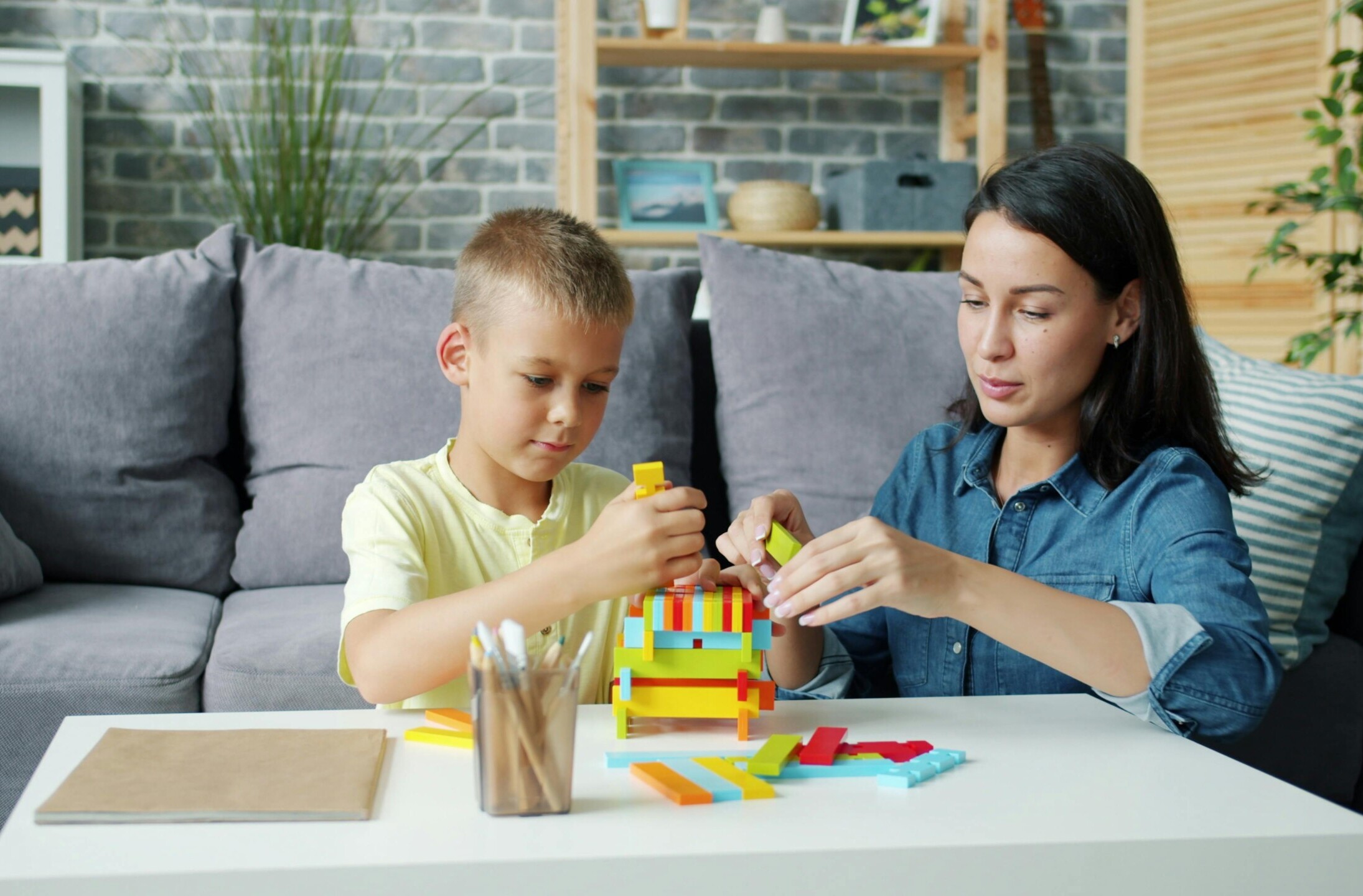
Parents who hear about it for the first time usually have the same reaction — something between curiosity and mild scepticism. Lego. In a therapy setting. For children who are struggling socially, emotionally, with communication. The scepticism is understandable. Lego, in a therapy room, as a serious clinical intervention — it doesn’t immediately scan.
Dr Daniel LeGoff, a clinical psychologist, developed lego therapy in the early 2000s — originally for autistic children, though the population it’s used with has broadened considerably since. The medium is Lego. The targets are social communication, collaborative problem-solving, emotional regulation. The structure is specific, the roles are defined, the outcomes are measurable. It’s not playtime.
The Structure Behind the Bricks
What separates lego based therapy from a child sitting alone with a set is the collaborative format. Sessions involve at least two children working together to complete a build, with clearly assigned roles that rotate across the programme.
One child is the Engineer — they hold the instructions and read out the steps. One child is the Supplier — they find and hand over the correct pieces. One child is the Builder — they do the actual construction. To complete anything, all three have to communicate accurately, listen carefully, and tolerate the pace of others.
The structure creates genuine interdependence — and quietly generates repeated practice in exactly the skills many neurodivergent children find hardest when no one’s managing the environment for them. Every child has a defined role with clear expectations, which reduces the ambient anxiety about what they’re supposed to be doing. The roles rotate deliberately. A child who defaults to controlling the build has to learn to be the Supplier. A child who finds verbal instruction difficult has to practise being the Engineer. The discomfort is the point — managed carefully, at a pace the child can handle.
What the Therapist Is Watching
A trained therapist running a lego therapy session isn’t just supervising the build. They’re observing how each child handles the moments when things go wrong — a piece handed over incorrectly, a step misread, a structure that collapses. How a child responds to mild failure in a collaborative context tells a therapist a significant amount about where the work needs to go.
They’re also watching for what doesn’t get said. A child who withdraws when they make a mistake. One who can’t resist correcting the Builder even when they’re supposed to be the Supplier. None of that gets flagged in the moment in a heavy-handed way — the therapist notes it, works with it across sessions, feeds it back to parents in a way that’s useful rather than just descriptive.
The Brick by Brick Programme
Brick by brick lego therapy is the formalised version of the approach, developed directly from LeGoff’s original research. The programme runs across twelve or more sessions, staged deliberately. Early on, children build independently in the same space — parallel play, no collaboration required yet, just getting used to the room and the person running it. Later sessions introduce the Engineer-Supplier-Builder structure. More advanced stages bring in free-build projects where children negotiate their own designs together — considerably harder than following instructions, because it requires genuine creative compromise.
The sequencing exists for a reason. A child who already finds collaboration hard, dropped straight into a high-demand joint build, is just going to confirm what they already believe about themselves in group situations.
LeGoff’s original studies showed significant improvements in social competence ratings for children who completed the programme compared to control groups. Follow-up data suggested gains held over time, not just immediately post-intervention. Replications in the UK, US, and Australia have landed in broadly the same place — which, for a relatively niche intervention, is worth something.

Who Lego Therapy Helps
The original population was autistic children, and that remains the primary group. Lego therapy for ADHD has developed into a significant strand of the work. A defined task, a physical build, immediate feedback when something goes wrong — for a child with ADHD, that combination holds attention in a way that open-ended conversation rarely does. What parents tend to notice first isn’t a dramatic shift inside sessions. It’s something more sideways — a slightly longer tolerance for waiting their turn at dinner, or a quieter reaction when something doesn’t go their way in an unrelated context.
The referral profile more broadly is less about specific diagnoses and more about a recognisable pattern — children who’ve learned that unstructured social situations tend to go badly for them, and have started organising their lives around avoiding them. Social anxiety, language difficulties, a history of social rejection. The common thread is the avoidance, and what’s underneath it.
Teenagers are harder. Some find the Lego medium embarrassing — fair enough, honestly — so adapted versions use more complex engineering challenges or different materials entirely. The collaborative structure stays. Whether that version suits a particular adolescent is something that needs an actual conversation, not a blanket recommendation.
Adults, occasionally. There’s a smaller literature here, mostly in workplace and rehabilitation contexts. Not the primary use case, but worth knowing it exists.
The Carry-Over Question
The generalisation from the therapy room to daily life isn’t automatic. It needs reinforcing. Therapists working with ADHD children through this programme usually spend time with parents identifying where the skills being practised in sessions have natural transfer points at home — giving parents specific, concrete ways to create those moments rather than just hoping the learning carries over.
Honestly, the carry-over question is one of the more important things to raise with a therapist before starting any programme. How they answer it tells you a lot about how they work.
How Sessions Run
Sessions typically run in small groups — two to four children — matched by age and broadly similar developmental profile. The matching matters more than parents sometimes expect. A group that’s too mismatched in ability creates frustration at both ends.
Sessions run for approximately fifty minutes. Parents aren’t usually in the room, though therapists provide regular updates on what’s being observed across sessions. Initial assessment looks at where a child is currently sitting across the key skill areas — social initiation, turn-taking, emotional regulation, frustration tolerance — so there’s a baseline to measure against.
The assessment also shapes group placement. Two children who both struggle significantly with control and turn-taking in the same group is a predictable problem. Getting the composition right at the start saves difficulty later.
For NDIS participants, lego based therapy can typically be funded under Capacity Building — Social Skills, depending on plan goals. Worth confirming with your plan manager before the first session.
What the Research Doesn’t Settle
The evidence base is real and reasonably consistent. Worth being honest about its limits, though.
Most studies have relatively small sample sizes. Outcome measures differ across studies, which makes comparison difficult. Almost all the research uses therapist or parent ratings as the primary outcome — meaningful, but not the same as longer-term independent assessment of how children are functioning socially in naturalistic settings years later.
A parent asking how confident we can be that the gains will last into secondary school is asking a question the research can’t fully answer yet. The clinical experience across practitioners who’ve been running these programmes for a decade or more is consistent enough to take seriously. Whether that’s enough of an answer depends on the parent.
The literature is still growing, yet it is just like any other non-traditional therapy that is becoming more common as it helps to target specific needs.
Leave A Comment

Anxiety has a particular quality that makes it hard to treat through conversation alone.

Type “gaming therapy” into a search engine and the results assume you know what
The session before this one didn’t work. That’s usually how parents end up here

The word “affirming” gets used loosely. In neurodivergent-affirming practice it means something specific —