
Art therapy is a clinical form of psychotherapy that uses art-making as its primary tool. At MindBridge Psychology, our art psychologists work with adults and children across a wide range of presentations — anxiety, trauma, grief, depression, ADHD, autism, and more — using creative practice as a clinical medium, not a recreational activity.
You do not need to be creative. You do not need to have made art since primary school. What happens in an art therapy session is not about the quality of what gets made but rather about what making it reveals, and what working with it therapeutically makes possible.
What Is Art Therapy?
Art therapy is not an art class with a therapist present. It is a recognised form of psychotherapy in which the process of creating, drawing, painting, sculpting, collaging, or working with other visual materials, is used as a clinical tool for expression, processing and change.
The people who deliver it are art psychologists: practitioners trained in both psychology and the specific clinical application of art-making. That dual training is what distinguishes art therapy from creative workshops, art programmes in hospitals, or occupational therapy with an arts component. An art psychologist understands not just how to facilitate creative work but how to read it clinically and work with it therapeutically.
Art therapy and mental health have a well-established research relationship. The evidence base covers anxiety, depression, trauma and PTSD, grief and bereavement, autism, ADHD, eating disorders, chronic illness, and palliative care. It works across the lifespan from young children who do not yet have the verbal capacity to articulate their inner world, to adults who have the words but find that talking is not enough.
Mindbridge psychology
Art Therapy for Adults
Adults come to art therapy for many reasons. Some have tried talking therapy and feel stuck despite understanding their situation. Others experience grief, trauma, or ongoing emotional fatigue that is difficult to put into words.
Art therapy works by bypassing overthinking. When making, self-monitoring relaxes and thoughts become expressed through images, choices, and materials, which are then explored collaboratively with the therapist.
At MindBridge, we commonly support anxiety and stress, grief and bereavement, depression, trauma, and self-esteem difficulties.

Qualified Art Psychologists
Our therapists are trained professionals with expertise in art therapy to guarentee safe and evidence-informed care.
Personalised, Client-Centred Care
Every session is tailored to the individual, using approaches that match your needs, goals, and comfort level.
Safe and Supportive Space
A calm, non-judgemental space to explore emotions at your own pace, without pressure to talk before you’re ready.
Art Therapy for Children
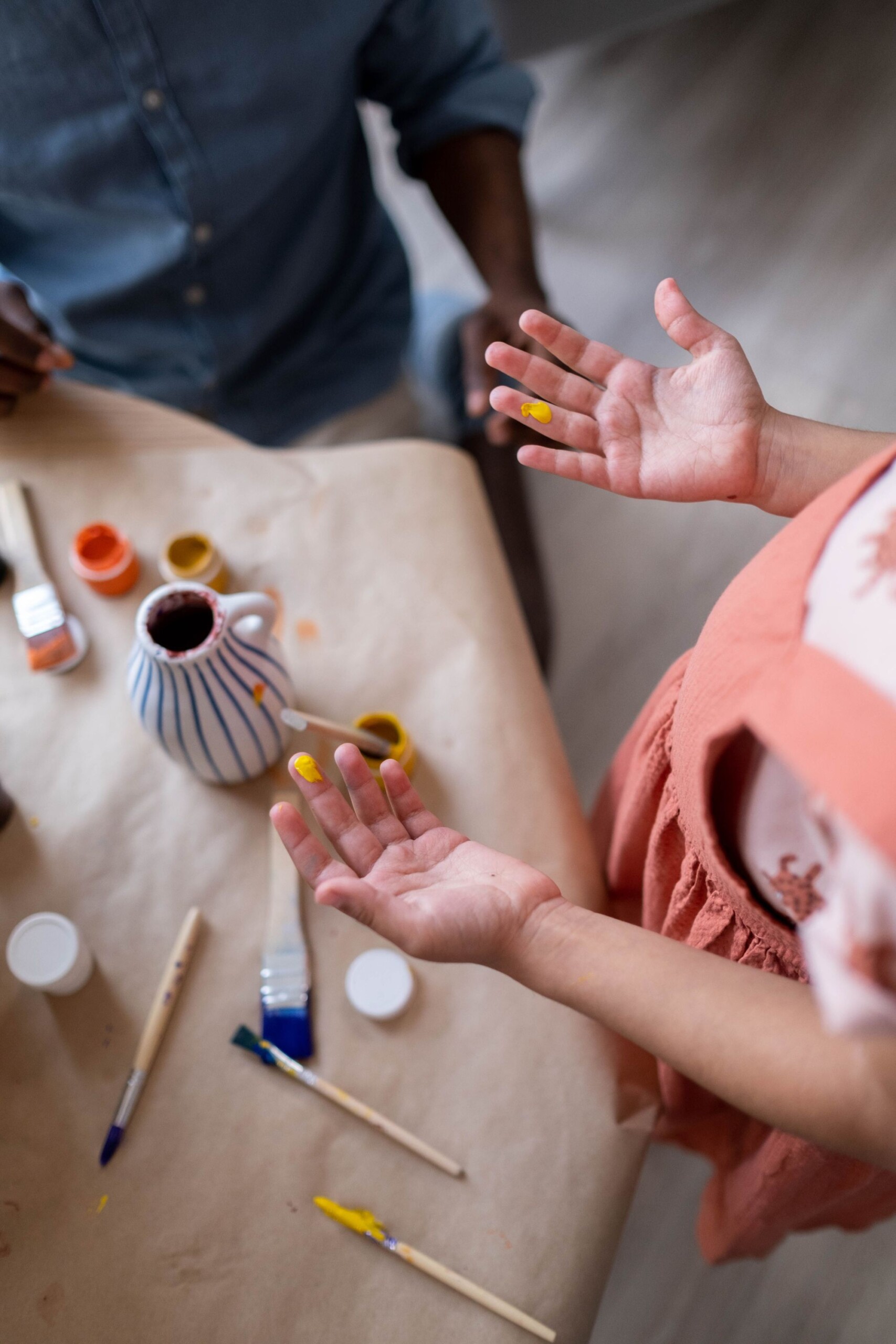
Children often communicate better through doing than through talking, and art therapy works with that directly. A child who cannot explain why they are anxious about school, or why they are hitting their sibling, or why they stopped eating properly after a family separation, can sometimes show it. The art therapist works with what appears in the work.
For children with ADHD, art therapy is particularly well matched. The tactile, kinetic nature of art-making including handling materials, building, pressing, tearing, and layering suit profiles that struggle with stillness and verbal processing. ADHD art therapy activities are not worksheets or structured exercises; they are open-ended enough to hold a child’s interest and structured enough to support the therapeutic relationship.
For autistic children, art therapy offers a non-verbal communication channel that does not depend on social scripts or eye contact. Sensory engagement with materials can be regulating in itself. The art therapist follows the child’s lead rather than directing toward a particular outcome.
Art therapy for children at MindBridge is delivered by Angelica Carey, with training in both play and art therapy. Sessions run for 30-45 minutes for children aged 3-7 years old and 50-60 minutes for children aged 8+.
What to expect in an art therapy session
Our team at Mindbridge Psychology offers a gentle, supportive space where you don’t need to be “good at art” to take part. Sessions focus on expression rather than artistic skill, using creative activities to help explore thoughts, emotions, and experiences in a safe and guided way. Your therapist will support you at your own pace, helping you make sense of what comes up through both conversation and creative processes.
Art Therapy for Anxiety
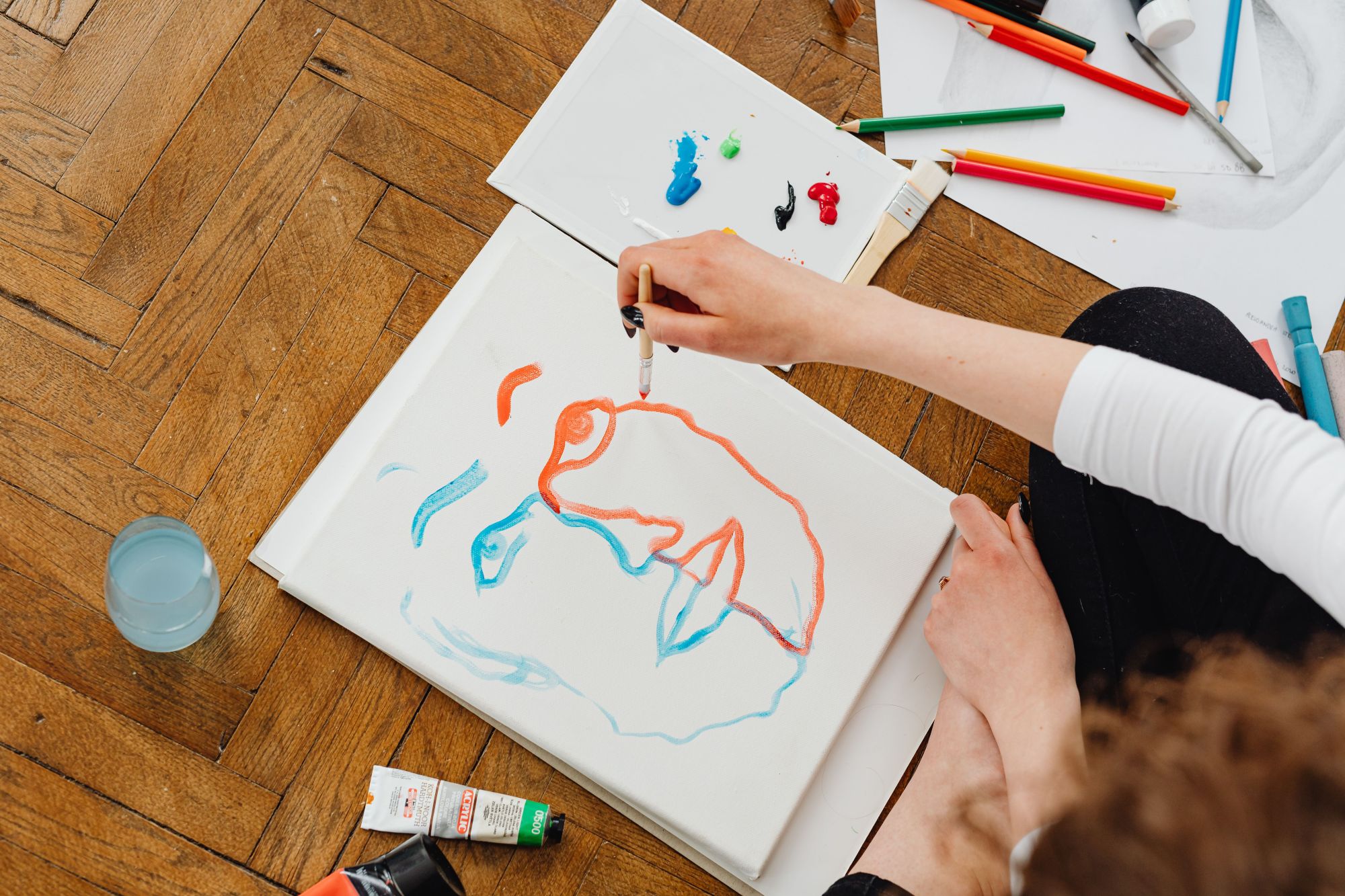
Anxiety shows up in the body as much as the mind — through tension, breath changes, and constant alertness. Art-making can help regulate this by engaging attention, rhythm, and sensory focus, supporting nervous system calming in ways talk-based approaches may not always reach.
Art therapy is not just relaxation; it is a structured clinical process where meaning is explored through what is made and how it is made. The clinical work is what happens before, during and after the making — the attention to what the work contains and what it might mean.
At MindBridge, approaches for anxiety include mandala work, free mark-making, collage, and clay work, chosen based on the client’s needs and stage of therapy. The choice of materials is not arbitrary; different media have different physiological and psychological properties, and a trained art psychologist selects them based on the client’s needs and stage of treatment
Children with anxiety often respond particularly well to art-based and play-based approaches.
Art therapy for trauma
Trauma is one of the areas where art therapy has strong clinical support and a clear therapeutic rationale. Traumatic experiences are often stored in the body and in implicit memory, meaning they exist outside of verbal narrative, which is why talking alone is sometimes not sufficient.
Art therapy offers an alternative pathway. Creating an image or object externalises the experience, placing it outside the self where it can be observed and processed. This distance is not avoidance, but a controlled way of engaging with difficult material without becoming overwhelmed.
In trauma-focused sessions, our art psychologists commonly work with PTSD and complex PTSD, childhood trauma, abuse and neglect, medical trauma, grief with traumatic features, and trauma responses following events such as accidents, assault, or sudden loss.
FAQs
No — you do not need any artistic skill or experience to participate in art therapy. It is not about producing “good” artwork, but about using creative expression as a way to explore thoughts, emotions, and experiences.
An art psychologist is a qualified psychologist who is also trained in the clinical use of art-making within therapy. This is different from an art teacher or workshop facilitator, as the focus is on psychological support and emotional wellbeing through structured therapeutic practice.
Your artwork stays private and belongs to you, and it is not shared or displayed without your consent. It is used as part of the therapeutic process, where you and your therapist may reflect on it together.
Yes — art therapy is an evidence-based approach supported in areas such as anxiety, depression, trauma, and ADHD. It is recognised as a valuable way to support emotional wellbeing and mental health through creative expression.
Yes — art therapy for children is commonly used to support emotional expression, anxiety, ADHD, and autism-related needs. It is often particularly helpful for children who find it easier to communicate through creative activity rather than words
Art therapy trauma work helps externalise difficult experiences through imagery and creative expression, making them easier to process safely. It is used within a trauma-informed framework to support emotional regulation and integration.
Art therapy can be delivered online, although it may require some preparation such as access to basic art materials and a suitable space. Sessions are adapted to ensure the process remains safe and effective in a virtual setting.
Art therapy may be eligible for Medicare rebates when provided by a registered psychologist under a Mental Health Care Plan. It may also be funded through the NDIS depending on the participant’s plan and therapeutic goals. Please contact MindBridge to discuss your individual situation.