There’s a particular kind of person who arrives at art therapy having already tried everything else. Not sceptical about therapy as a concept — sceptical about whether any of it was designed for them. The waiting rooms, the worksheets, the sessions that felt more like being interviewed than helped. Art therapy tends to attract that person.
Art therapy is a form of psychotherapy that uses creative activity — drawing, painting, collage, clay, mixed media — as the primary medium for the work itself. A registered art therapist isn’t an art teacher with a counselling qualification. They’re a clinician using the process of making to access emotional and psychological material that talk-based approaches sometimes can’t reach. The making is the session, not a warm-up to it.
What Happens in a Session
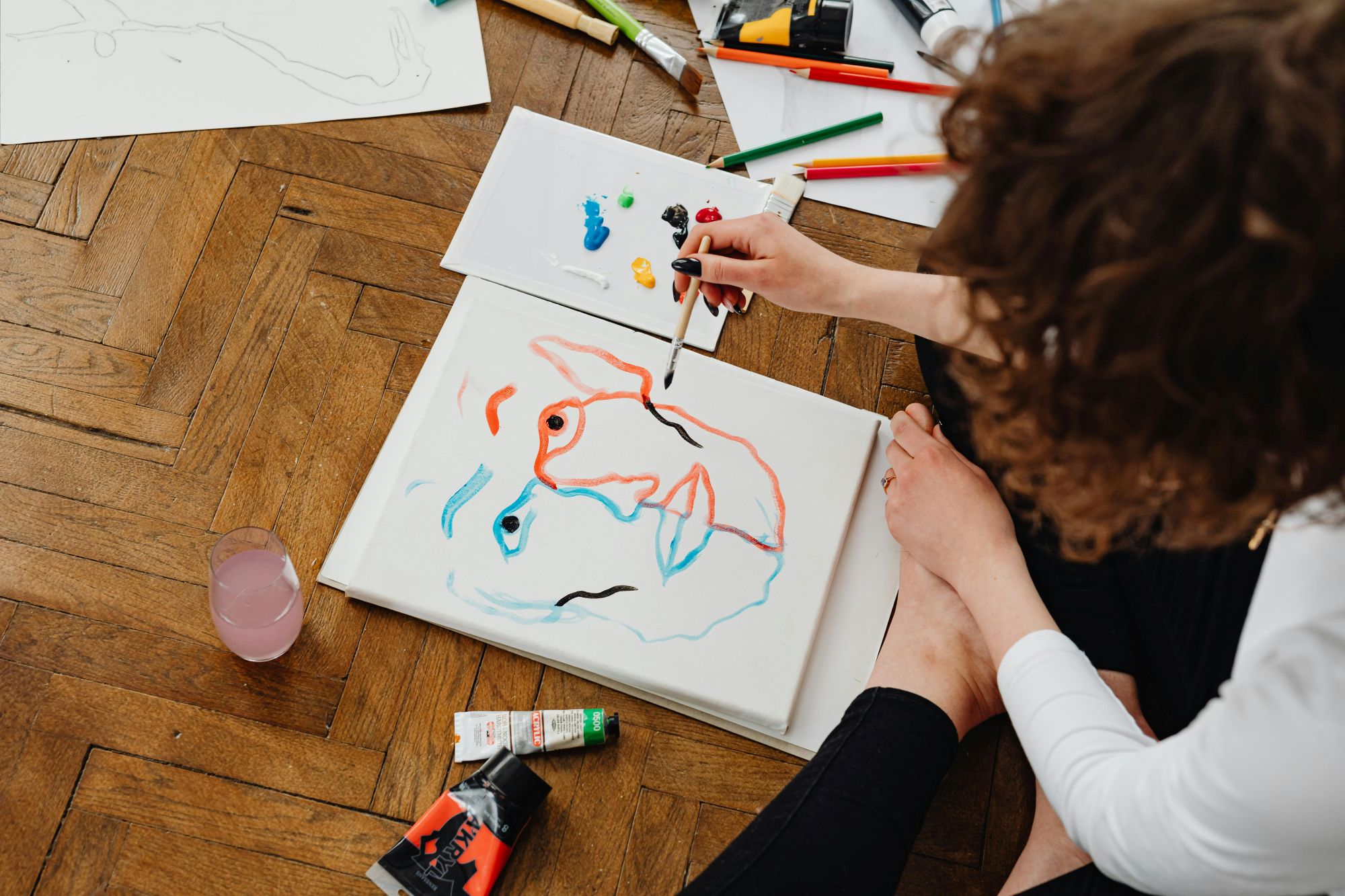
The art doesn’t need to be good. That’s probably the thing people misunderstand most before they come in — they worry about ability, whether they’ll embarrass themselves, whether they’re doing it wrong. There’s no wrong. A therapist working with a client who’s spent forty minutes smearing paint across a page without any recognisable form has as much to work with as one sitting with someone who’s produced something technically careful.
What matters is what happens during the making. Colour choices, pressure, whether someone fills the whole page or crowds everything into one corner — a therapist trained in art therapy and mental health frameworks reads that material not as symbolism to decode, but as a real-time reflection of the client’s internal state. Sometimes the most significant part of a session is the ten minutes of conversation that happens after the making, when there’s an external object on the table to look at together. It’s easier to talk about a drawing than about yourself. Most of the time they turn out to be the same thing.
Sessions run fifty minutes to an hour. Some involve a specific prompt; others are entirely open. The therapist is present throughout — observing, occasionally asking something, sometimes just sitting in silence while the client works.
Who It Actually Helps
Art therapy for adults has a solid evidence base in trauma recovery, anxiety, depression, and grief. For people whose most significant experiences happened before they had language for them — early childhood, or events that were never processed verbally — the image-making accesses material that talking doesn’t always reach.
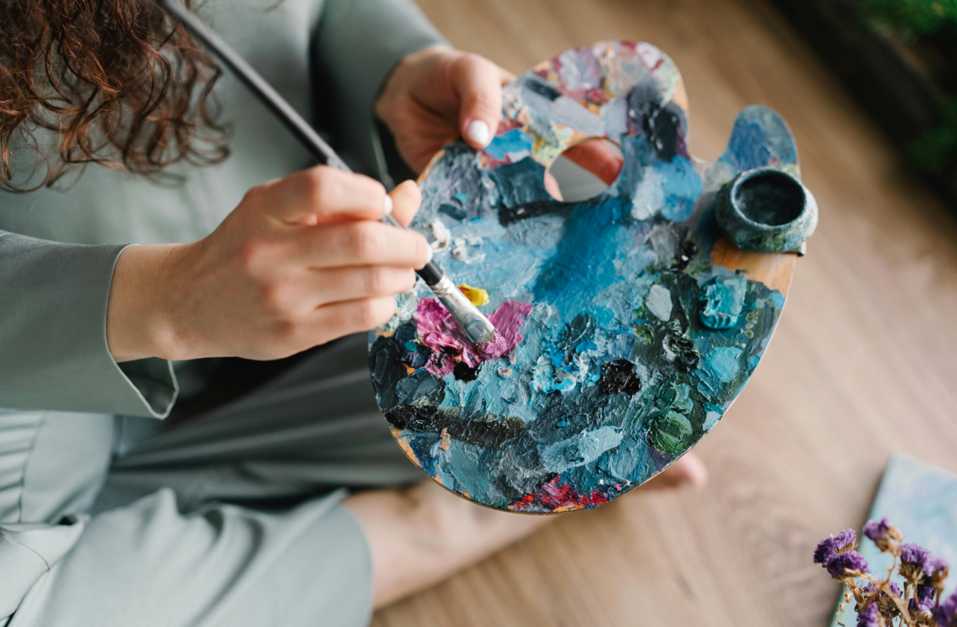
Anxiety and art have an interesting relationship. The focused, repetitive nature of some creative tasks — filling a page, working clay, building a collage piece by piece — interrupts the cognitive loops anxiety runs on. Not because creativity is inherently calming. It isn’t always. But sustained physical attention on something external takes up cognitive bandwidth that would otherwise be occupied by the loop.
For neurodivergent clients, the format removes a pressure that standard talk therapy quietly imposes. Eye contact, verbal fluency, the expectation that you’ll produce insight on demand — none of that is required here. The medium accommodates people who process emotion more easily through action than through language. That’s not a workaround. For some clients it’s just the more accurate fit.
Children take to it without much explanation needed, which makes sense. Image-making is already one of their primary languages.
Why Trauma Specialists Use It
Trauma research over the last two decades has changed how clinicians think about what actually works. The understanding that trauma lives in the body — not just in narrative memory — has pushed approaches like art therapy from the margins toward something closer to standard practice in trauma-informed settings.
Art therapy and trauma intersect for a specific reason. Verbal recounting of traumatic events can retraumatise. The imagery that surfaces through art therapy tends to approach the same material obliquely, at whatever pace the client’s nervous system can tolerate, without requiring a coherent narrative before one is possible. That sequencing matters more than most people realise when they’re first looking into it.
This doesn’t replace trauma-focused CBT or EMDR. For many clients it sits alongside those approaches, or does the groundwork before more direct processing begins.
The Evidence Question
Sceptics — and there are reasonable ones — point to the difficulty of running rigorous RCTs on arts-based therapies. That’s a fair methodological point. The research base is more varied than it is for CBT, and effect sizes shift across populations.
The evidence for art therapy and mental health outcomes is stronger than the scepticism implies, though. Consistent anxiety and distress reductions in oncology settings. Meaningful symptom reduction with veterans and trauma survivors. A growing paediatric literature covering autism, ADHD, and childhood anxiety. Not overwhelming by pharmaceutical trial standards. Solid enough that the clinical community isn’t seriously debating whether it works — just for whom, and in what combinations.
What research struggles to capture is something clinicians observe across years of practice: clients who arrived unable to identify what they were feeling gradually developing a vocabulary — not always a verbal one — for their own internal states. Harder to measure. Real anyway.
Art Therapy Versus a Creative Class
A workshop, an open studio, a community art class — these have genuine value. Creative activity is good for people regardless of context. But they’re not art therapy, and the distinction matters more than it might seem.
The difference is the clinical framework and the therapeutic relationship. An art therapist isn’t facilitating self-expression for its own sake. They’re working within a structured process that includes assessment, goal-setting, ongoing clinical observation, and coordination with other treating professionals where relevant. The room might look like an art room.
For adults who’ve had unrewarding experiences with talk therapy, that’s worth sitting with. Art therapy isn’t a softer option. For some people it’s a more direct one.
Coming In for the First Time
The first session is partly assessment, partly orientation — a chance for the therapist to understand what’s brought someone in, and for the client to be in the space without pressure to produce anything meaningful immediately. Some people need one session to settle. Others need a few.
The most common barrier isn’t scepticism. It’s embarrassment about creative ability. People who haven’t drawn since primary school assume they’ll spend the session apologising for what they make. A therapist who’s been doing this work for any length of time has never once been interested in whether the work is good. That’s not a reassuring thing people say. It’s just structurally true — the quality is irrelevant to what they’re looking at.
For NDIS participants, art therapy can be funded under Improved Daily Living supports depending on plan goals. Therapists can walk through what documentation is needed before committing to a schedule — worth raising in the first conversation rather than after.
People searching for art therapy near me in Melbourne are, most of the time, at a point where they’ve already decided they want to try it and are working out the logistics. Proximity matters for therapeutic continuity in a way that’s easy to underestimate when booking a first appointment. A session that requires forty minutes of travel each way is a session that gets cancelled when things get hard — which is exactly when attendance matters most.
Whether art therapy is the right fit for a specific person is genuinely hard to answer in advance. The populations it tends to help most — trauma survivors, neurodivergent clients, people who’ve felt unheard in verbal therapy, children, adults carrying grief or anxiety that hasn’t shifted — are broad. Most people reading this probably have some reason to consider it.
What that reason is worth acting on is a question most people end up answering by just coming in once.
Leave A Comment
Anxiety has a particular quality that makes it hard to treat through conversation alone.

Type “gaming therapy” into a search engine and the results assume you know what
The session before this one didn’t work. That’s usually how parents end up here
The word “affirming” gets used loosely. In neurodivergent-affirming practice it means something specific —